

Posted by: Clear Advantage in Vision Correction on July 8, 2026
Being told your prescription is “too high” for LASIK can be disappointing. You scheduled the consultation, hoping to leave contacts and glasses behind for good, only to learn that the most familiar laser procedure may not be the answer for your eyes.
Here is something most do not realize: LASIK is only one of several procedures available to correct nearsightedness, and it is not always the right one for every patient. Severe myopia often points you toward options that work differently and may actually fit your eyes better.
Keep reading to learn how the full range of vision correction procedures at Clear Advantage Vision Correction Center can address even the strongest prescriptions, and which one might be a match for you.
What Does “Severe Nearsightedness” Mean?

Nearsightedness, or myopia, is measured in diopters. The higher the number, the stronger the correction your eyes need. A mild prescription might sit around -1.00 or -2.00. Moderate myopia falls between -3.00 and -6.00. Anything beyond -6.00 starts to be considered severe, and prescriptions above -10.00 are often called extreme myopia.
You likely already know what this feels like without needing a number on paper. Your glasses’ lenses are heavy at the edges. Larger-than-average contact lenses sit in your eyes like small plastic bottle caps. Waking up without your glasses feels like navigating through thick fog.
However, Clear Advantage Vision Correction Center serves patients with a range of prescriptions. Severe myopia is more common than many patients assume, and it does not disqualify you from the procedures that could change your daily life.
Why LASIK Has a Prescription Ceiling
LASIK reshapes the cornea by removing a small amount of tissue, which changes how light focuses on your retina. Stronger prescriptions require removing more tissue, and eventually, the cornea cannot safely provide what is needed without weakening its structure.
Most surgeons cap LASIK candidacy around -8.00 to -10.00 diopters, and even within that range, corneal thickness and shape matter. If your cornea is on the thinner side or your prescription has been climbing in recent years, LASIK may not deliver stable, long-term results.
LASIK is an excellent procedure for patients with moderate prescriptions and healthy corneas. The technology has improved considerably, and recovery is typically fast.
When your eyes fall outside those windows, though, pushing for LASIK is not the answer. The better question is which procedure fits your eye’s anatomy and delivers the clearest, most lasting results.
EVO ICL: A Leading Choice for High Myopia

The EVO ICL works in an entirely different way. Rather than reshaping the cornea, a small biocompatible lens is placed inside the eye, behind the iris and in front of your natural lens. Your cornea is left almost entirely untouched.
For patients with severe nearsightedness, this matters for two reasons. First, the EVO ICL can correct prescriptions from -3.00 all the way to -20.00 diopters, covering the full range where LASIK falls short. Second, because no corneal tissue is removed or reshaped, thin corneas are not a barrier to candidacy. Patients who have been turned away from laser procedures often find that the EVO ICL opens the door they thought was closed.
The lens is made from a collamer material well tolerated by the eye and includes built-in UV protection. The procedure takes about 20 to 30 minutes, and most patients notice clearer vision almost immediately afterward.
Could You Be a Candidate for the EVO ICL?
Other Options Worth Considering
The EVO ICL is not the only alternative to LASIK for high prescriptions. Two other procedures deserve attention depending on your age, prescription, and eye health.
Refractive Lens Exchange
Refractive lens exchange replaces your eye’s natural lens with an artificial one tuned to your exact prescription. The procedure is similar to cataract surgery, with the main difference being that it is performed before cataracts develop.
For patients in their 40s and beyond with severe myopia, RLE offers two benefits in one procedure. It permanently corrects the refractive error and eliminates the need for future cataract surgery, since the natural lens is no longer in place.
Patients who are already noticing early signs of presbyopia, the near-vision blur that arrives around age 45, often find RLE particularly appealing because advanced lens options can address both issues at once.
PRK
PRK is a laser procedure similar to LASIK, with one major difference: there is no corneal flap. Instead, the outer surface of the cornea is gently removed, the underlying tissue is reshaped, and the surface regrows on its own over a few days.
PRK is an option for patients whose corneas are slightly too thin for LASIK or whose lifestyles include contact sports or physically demanding work where a corneal flap could pose a long-term risk. It does not extend candidacy as far into severe prescriptions as the EVO ICL, but for borderline cases, it can be the right answer.
Finding the Right Fit for Your Eyes
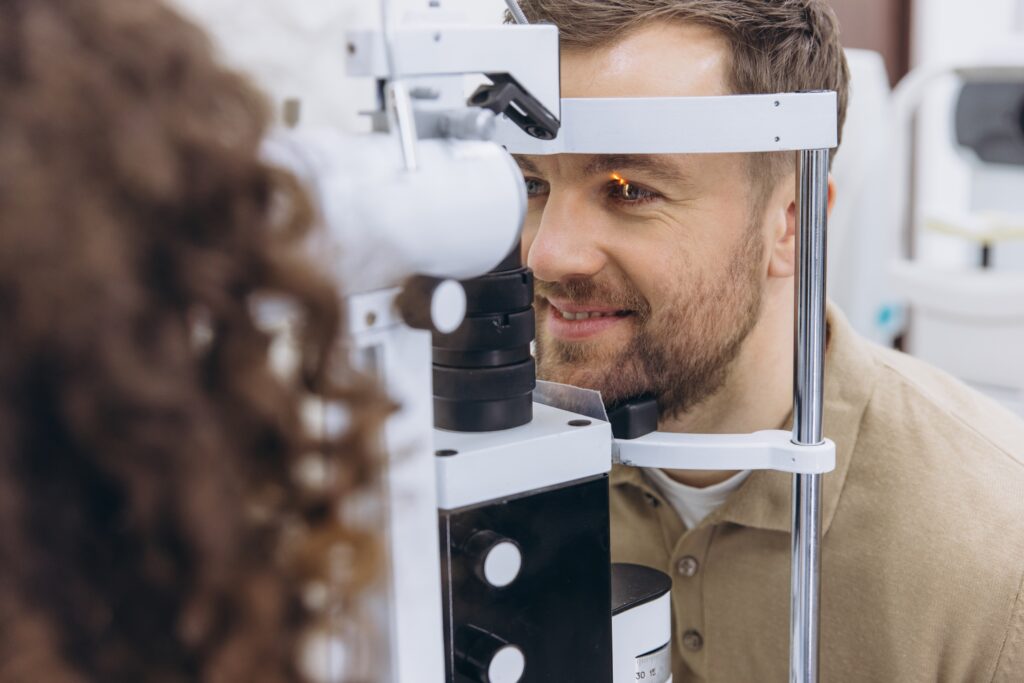
When your prescription is in severe territory, a comprehensive consultation with an experienced refractive surgeon becomes even more important, because the answer depends on measurements only a professional eye exam can produce: corneal thickness, corneal shape, anterior chamber depth, retinal health, and the stability of your prescription over the past year or two.
Going into that appointment having thought through some questions to ask your surgeon can help you feel more in control of the decision. Severe nearsightedness is not a life sentence of thick lenses or uncomfortable contacts. With the right procedure matched to your eyes, the kind of freedom you may have written off years ago could be within reach.
Ready to find out which vision correction procedure fits your prescription and your eyes? Schedule an appointment at Clear Advantage Vision Correction Center in Portsmouth, NH, today.